
Winter in North Idaho doesn't mess around. One week you're raking leaves, the next you're shoveling heavy, wet snow off the driveway before work and scraping the truck in the dark. Whether you're sitting a cold ridge for a late whitetail, clearing the walk or just running errands around Coeur d'Alene, staying warm comes down to two things: smart layers and good boots. Here's how we dress for it.
The Layering System, Made Simple
The trick isn't one giant coat. It's a few layers that work together so you can add or shed warmth as your activity level changes. Sweat is the enemy: once you're damp, you'll get cold fast when you stop moving.
1. Base Layer: Manage Moisture
Your base layer sits against your skin and moves sweat away from it. Merino wool and synthetic fabrics both work well; merino stays warm when damp and resists odor, while synthetics dry quickly and are tough. Skip cotton, which holds moisture and steals heat. Choose lighter weights for active work like shoveling or hiking, and heavier weights for sitting still in a blind or on a stand.
2. Mid Layer: Hold the Heat
Fleece, a wool sweater, or a light insulated jacket or vest traps warm air. This is the layer you'll adjust most. Unzip or take it off when you're working hard, and put it back on the minute you stop.
3. Outer Layer: Block Wind, Snow and Rain
Our winters swing between dry cold and wet snow, so a weather-resistant shell or insulated outer jacket is key. Look for features that fit how you'll use it: a hood that fits over a hat, pit zips to dump heat, and pockets you can reach with gloves on. The North Face makes excellent jackets for everyday winter wear and getting around town. Browse clothing.
Insulated Workwear for Chores and Job Sites
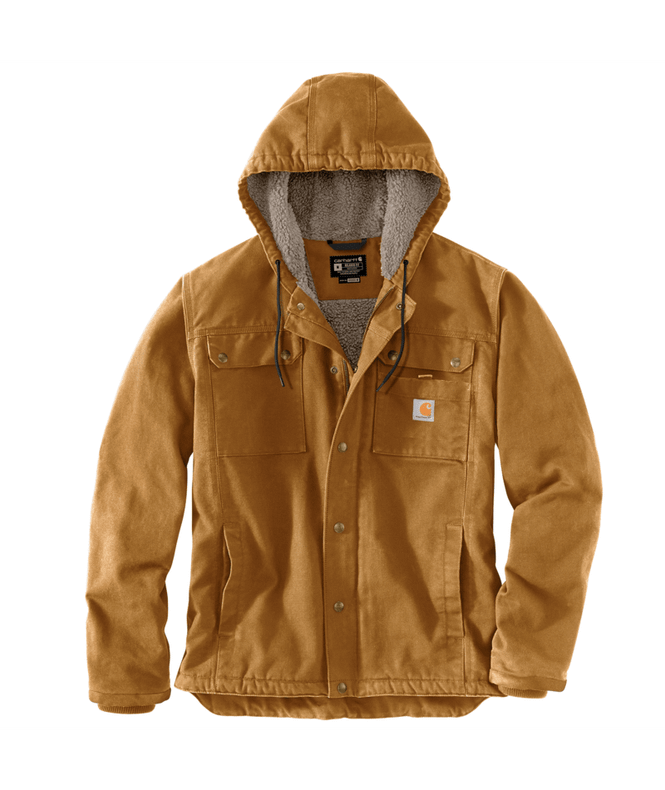
For shoveling, splitting firewood, plowing, feeding animals or working outside all day, insulated workwear is hard to beat. Carhartt is a North Idaho staple for a reason. Their duck canvas jackets, bibs and coveralls hold up to abrasion, block wind and keep you warm while you work. Bibs are especially handy in deep snow because they keep it from sneaking in at the waist. Wrangler and Ariat also make durable work-ready clothing for daily wear. Many people run a base layer, a flannel or fleece, and an insulated Carhartt jacket or bib as their everyday winter uniform.
Boots: Waterproof, Warm and Grippy
Cold, wet feet will end a day faster than anything. A good winter boot does three jobs: it keeps water out, holds warmth in, and grips on snow and ice. Browse footwear.
- Waterproofing: Look for a waterproof membrane or rubber lower. Slush and wet snow are common here, especially early and late in the season.
- Insulation: Insulation is often listed in grams. More grams means more warmth, which is great for sitting still and less ideal for hiking hard. Active hunters often prefer lighter insulation, while stand hunters and folks working outside all day may want more.
- Traction: Deep lugs and a rubber outsole help on packed snow. For icy parking lots and driveways, slip-on traction cleats add grip.
- Fit: Try boots on with the socks you'll actually wear. A boot that's too tight squeezes off circulation and makes your feet colder.
For work boots, Red Wing is a trusted name on job sites, and Danner makes hunting and outdoor boots built for rough country. Ariat offers work and western boots that handle barn chores and everyday wear. Pair any of them with good wool socks.
Hands, Head and the Little Things
Heated Gloves and Hand Warmers
If your hands are always the first thing to go, heated gloves can be a game changer for sitting in a blind, riding a snowmachine to the trailhead, or a long morning of snow removal. Charge batteries the night before and bring a backup pair of regular gloves. Simple disposable hand warmers in your pockets help too.
Hats, Neck Gaiters and Socks
A warm beanie and a neck gaiter take up almost no room and make a big difference on windy days along the lake. Keep a spare pair of wool socks in your truck or pack. Dry socks at lunch can save the afternoon.
Dressing for the Hunt vs. the Driveway
- Hunting: Hike in light and pack your insulation, then layer up once you're set up. Quiet outer fabrics help, and blaze orange is a smart safety choice during rifle seasons.
- Shoveling: Dress lighter than you think, since it's hard work. Take breaks, lift with your legs, and stay hydrated even when it's cold.
- Everyday: Keep a winter kit in your vehicle: a warm jacket, gloves, hat, boots, blanket, flashlight and snacks, in case you slide off a road or get stuck.
Come Try It On
Fit matters with boots and outerwear, so the best way to shop is in person. Look over our clothing and footwear online, then stop by Black Sheep Sporting Goods in the Silver Lake Mall, 200 W. Hanley Ave., Coeur d'Alene. We're open Monday–Saturday 10am–7pm and Sunday 10am–6pm. Sizes and styles move quickly once the snow flies, so call 208-667-7831 for exact availability. Stay warm out there, neighbors.